Orotates and Mineral Transporters
(DrEddyClinic News) Whenever anyone asks me what’s the best way to take mineral supplements http://bit.ly/dreddyclinic-supplements, I often give an answer they don’t expect, “Orotates!” The blank looks I usually get tell me that further explanation is necessary.

A few years ago, Ed Sharpe wrote a long and thorough report about orotates and their benefits. I want to give credit to Ed for the original work as it was one of the most comprehensive reviews of the research I’ve seen. I suggest checking it out for yourself, but to provide a quick introduction, I’ve created an abridged version below.
What Are Orotates?
Orotates are the mineral salts of orotic acid, a natural substance found in our bodies, dairy products, and other food. Orotates are part of a system of electrolyte carriers that distribute minerals throughout the body. [1] Some orotate molecules can pass through cell membranes without breaking apart, allowing them to be absorbed very efficiently. [2] Because they’re absorbed so well, they make a fantastic delivery system for minerals.
Magnesium Orotate
Of all the minerals, magnesium http://www.dreddyclinic.com/forum/viewtopic.php?f=21&t=33111 is one of the most important. It’s helpful for migraines, the upper respiratory system, blood vessel elasticity, and cardiovascular health. [3] Combining magnesium with orotates enhances mineral transport and is superior to other magnesium supplements. [4] [5] [6] [7]
Potassium Orotate
Potassium deficiency is often a secondary consequence of magnesium deficiency. [8] Another cause is the use of potassium-wasting diuretics to control high blood pressure. [9] Potassium orotate supports cardiovascular health when combined with magnesium orotate. Potassium http://www.dreddyclinic.com/forum/viewtopic.php?f=21&t=34662 orotate supports wound healing and can speed up recovery following surgery. [10] [11] Potassium orotate also helps the body absorb vitamin C. [12] Animal studies suggest regular potassium orotate supplementation has a positive effect on mental well-being. [13]
Lithium Orotate
Lithium carbonate, the treatment for manic-depressive disorders, is structurally different from lithium orotate http://www.dreddyclinic.com/forum/viewtopic.php?f=21&t=33741. Lithium orotate offers neuroprotective effects, immune system support, and positive effects on liver, cardiovascular, thyroid, and immune function. If you suffer from an autoimmune disease such as rheumatoid arthritis or lupus, you should speak with your healthcare professional before taking lithium supplements http://www.dreddyclinic.com/forum/viewtopic.php?f=21&t=33743. While lithium is a natural element, it has been known to cause reactions http://dreddyclinic.com/forum/viewtopic.php?f=40&t=33850 in some people. [14]
Zinc Orotate
Zinc is necessary for bone health and is vital for the immune system. [15] [16] Zinc deficiency causes atrophy of the thymus, reduction in white blood cells, and susceptibility to infection. [17] [18] Males who are zinc deficient can experience hypogonadism and low testosterone levels http://www.dreddyclinic.com/forum/viewtopic.php?f=122&t=30715. [19] Zinc is also important for growth hormone activity. [20] One of the major, nutritional benefits of zinc is its antioxidant activity http://www.dreddyclinic.com/forum/viewtopic.php?f=21&t=32801. [21] [22] [23]
Calcium Orotate
Calcium supplements get credit for supporting skeletal health. Among them, calcium orotate is the most effective. Small servings of calcium orotate can be effective for promoting skin health and supporting normal blood pressure. If you’re looking for a calcium orotate supplement, IntraCal™ http://www.dreddyclinic.com/forum/viewtopic.php?f=19&t=30881 contains both calcium and magnesium orotate. Without magnesium, calcium can cause nerves to be over-activated, over-contracted, and tense.
Experiencing the Benefits of Orotates
Minerals are essential to human health and orotate minerals are, arguably, the best available. Do you have any experience taking orotates? How have they influenced your health? Leave a comment below and share your experience.
by Dr. Edward Group DC, NP, DACBN, DCBCN, DABFM
References:
1. Nieper HA. Recalcification of bone metastases by calcium diorotate http://www.ncbi.nlm.nih.gov/pubmed/5502790. Agressologie. 1970;11(6):495-502. Available as article #CA21 from the A. Keith Brewer International Science Library at (608) 647-6513 or on the Web.
2. Nieper HA. The clinical applications of lithium orotate. A two years study http://www.ncbi.nlm.nih.gov/pubmed/4607169. Agressologie. 1973;14(6):407-11. Available as article #CM12 from the A. Keith Brewer International Science Library at (608) 647-6513 or on the Web.
3. Swain R, Kaplan-Machlis B. Magnesium for the next millennium http://www.ncbi.nlm.nih.gov/pubmed/10586828. South Med J. 1999;92(11):1040-7.
4. Rosenfeldt FL. Metabolic supplementation with orotic acid and magnesium orotate http://www.ncbi.nlm.nih.gov/pubmed/9794088. Cardiovasc Drugs Ther. 1998;12(Suppl 2):147-52.
5. Villanyi P, Votin J, Rahlfs V. Arteriosclerosis, myocardial infarct and blood lipids, their therapeutic modification by magnesium orotate http://www.ncbi.nlm.nih.gov/pubmed/5513887 [in German]. Wien Med Wochenschr. 1970;120(5):76-83.
6. Jellinek H, Takacs E. Morphological aspects of the effects of orotic acid and magnesium orotate on hypercholesterolaemia in rabbits http://www.ncbi.nlm.nih.gov/pubmed/7575742. Arzneimittelforschung. 1995;45(8):836-42.
7. Nieper HA. Capillarographic criteria on the effect of magnesium orotate, EPL substances and clofibrate on the elasticity of blood vessels http://www.ncbi.nlm.nih.gov/pubmed/4440820. Agressologie. 1974;15(1):73-7. Available as article #CM19 from the A. Keith Brewer International Science Library at (608) 647-6513 or on the Web.
8. Altura BM, Altura BT. Interactions of Mg and K on blood vessels-aspects in view of hypertension. Review of present status and new findings http://www.ncbi.nlm.nih.gov/pubmed/6399341. Magnesium. 1984;3(4-6):175-94.
9. Franse LV, Pahor M, Di Bari M, Somes GW, Cushman WC, Applegate WB. Hypokalemia associated with diuretic use and cardiovascular events in the Systolic Hypertension in the Elderly Program http://www.ncbi.nlm.nih.gov/pubmed/10818057. Hypertension. 2000;35(5):1025-30.
10. Kolokol’chikova EG, Pal’tsyn AA. Electron-radioautographic study of the effect of potassium orotate on RNA and protein synthesis in fibroblasts during experimental wound healing http://www.ncbi.nlm.nih.gov/pubmed/6192854 [in Russian]. Biull Eksp Biol Med. 1983;96(8):115-8.
11. Bilich GL, Nazarova LV, Sungurova EV. The enzymatic status of circulating lymphocytes as an index of the regenerative process in the lungs under stimulation with pyrimidine and purine derivatives. A clinical experimental study http://www.ncbi.nlm.nih.gov/pubmed/6811382. Haematologia (Budap). 1982;15(1):71-81.
12. Kuzdenbaeva RS, Kurakina VE, Iztleuov MK. Effect of anabolic substances on the state of the individual components of the glutathione-ascorbic acid system http://www.ncbi.nlm.nih.gov/pubmed/7449993. Farmakol Toksikol. 1980;43(5):607-9.
13. Karkishchenko NN, Khaitin MI. Comparative study of the indices of the antidepressive activity of potassium orotate and piracetam http://www.ncbi.nlm.nih.gov/pubmed/3996568 [in Russian]. Farmakol Toksikol. 1985;48(2):32-5.
14. Lieb J. Lithium and immune function http://www.ncbi.nlm.nih.gov/pubmed/3302628. Med Hypotheses. 1987;23(1):73-93.
15. Atik OS. Zinc and senile osteoporosis http://www.ncbi.nlm.nih.gov/pubmed/6655182. J Am Geriatr Soc. 1983;31(12):790-1.
16. Igarashi A, Yamaguchi M. Increase in bone protein components with healing rat fractures: enhancement by zinc treatment http://www.ncbi.nlm.nih.gov/pubmed/10567672. Int J Mol Med. 1999;4(6):615-20.
17. Mocchegiani E, Giacconi R, Muzzioli M, Cipriano C. Zinc, infections and immunosenescence http://www.ncbi.nlm.nih.gov/pubmed/11164457. Mech Ageing Dev. 2000;121(1-3):21-35.
18. Fraker PJ, Jardieu P, Cook J. Zinc deficiency and immune functionbhttp://www.ncbi.nlm.nih.gov/pubmed/2200472. Arch Dermatol. 1987;123(12):1699-701.
19. Prasad AS, Mantzoros CS, Beck FW, Hess JW, Brewer GJ. Zinc status and serum testosterone levels of healthy adults http://www.ncbi.nlm.nih.gov/pubmed/8875519. Nutrition. 1996;12(5):344-8.
20. Kurtogu S, Patiroglu TE, Karakas SE. Effect of growth hormone on epiphyseal growth plates in zinc deficiency http://www.ncbi.nlm.nih.gov/pubmed/3508657. Tokai J Exp Clin Med. 1987;12(5-6):325-9.
21. Powell SR. The antioxidant properties of zinc http://www.ncbi.nlm.nih.gov/pubmed/10801958. J Nutr. 2000;130(5S Suppl):1447S-54S.
22. DiSilvestro RA. Zinc in relation to diabetes and oxidative disease http://www.ncbi.nlm.nih.gov/pubmed/10801967. J Nutr. 2000;130(5S Suppl):1509S-11S.
23. Floersheim GL. Synergism of organic zinc salts and sulfhydryl compounds (thiols) in the protection of mice against acute ethanol toxicity, and protective effects of various metal salts http://www.ncbi.nlm.nih.gov/pubmed/3630856. Agents Actions. 1987;21(1-2):217-22.
Alcohol and Breast Cancer: The One Million Women Study
(DrEddyClinic News) The Million Women Study, an Oxford University-based research effort, is making an attempt to come to a final decision on whether hormone replacement therapy is helping women through some of the more uncomfortable symptoms of menopause http://www.dreddyclinic.com/forum/viewtopic.php?f=30&t=33618, or, in fact, giving them cancer. The Million Women Study is quickly becoming what many experts are calling a “blueprint for women’s health.”

In an article in The Guardian [1], “A million women can’t be wrong,” it was announced that the study had found that even a small amount of all types of wine can lead to increases in a woman’s risk of developing breast cancer later in life [2].
These are shocking findings, considering that red wine has often been touted as one of the best ways to prevent cardiovascular diseases.
The Oxford study also looked at a variety of controversial women’s health issues, including birth control medication, hormone replacement therapy http://www.dreddyclinic.com/forum/viewtopic.php?f=122&t=34148, diet, pregnancy, childbearing, as well as menopause. The study, unlike many other small-scale undertakings, involves extremely reliable information, due to the sheer size of the number of women surveyed.

The Link Between Wine and Breast Cancer
While many people look forward to winding down from the daily grind with a glass of red or white wine, the Oxford study clearly indicates that in a study of over one million women, there is a clear link between even moderate amounts of wine and breast cancer.
Researchers feel that there may be a relationship between the behavior of alcohol on hormone levels in the body, especially estrogen. And as estrogen is such a key player in the regular reproductive cycle, and increased levels of estrogen have been clearly linked to breast cancer, some studies are looking into the possibility that alcohol may increase estrogen levels in women. The same study also suggests that the intake of alcohol may affect other biological systems related to increased cancer in women.

Red Wine and Breast Cancer
An example of this holistic understanding is that of the liver. It has been found that alcohol inhibits the liver from functioning at optimal levels. If the liver, which is responsible for ridding the body of toxins, is unable to function properly, our body may get overloaded with the carcinogens that the liver http://www.dreddyclinic.com/forum/viewtopic.php?f=37&t=33177 was unable to expel. Unfortunately for all of you wine-lovers out there, alcohol may also be acting as a co-carcinogen, meaning it may aid cancerous cells in their growth patterns.
The report also looked into many variables that the scientific community has not taken into consideration in regard to women and cancer. The Million Women Study questions participants on everything from whether they use butter or olive oil http://www.dreddyclinic.com/forum/viewtopic.php?f=18&t=32417 in their cooking, if they regularly listen to music or paint, and even variables such as stress levels and happiness indicators.
Suggested Ways to Reduce Your Risk

woman with wine glass
Although many of the findings from The Million Women Study are still emerging, the main ways for women to reduce their risks of developing cancer and heart disease are reported from the study as follows:
- Avoid Hormone Replacement Therapy (HRT): The Million Women Study found that use of the normal combined form of estrogen and progesterone HRT doubled women’s risk of cancer. The good news is that the increased risk goes away once women stop taking HRT.
- Stop Smoking: Smoking increases cancer risk in women by 32 percent. The great news is that the study found that, “If you give up smoking, within five years your risk of lung cancer http://dreddyclinic.com/forum/viewtopic.php?f=11&t=33697 has halved,” says Professor Valerie Beral, director of Oxford University’s cancer epidemiology unit.
- Maintain a Healthy Weight: This study found that being overweight, as well as underweight, increases risks. They recommend a body mass index (BMI) of 24.
- Stop Drinking Alcohol: Even one glass of any alcoholic beverage can increase your likelihood for breast cancer. The good news from the study states that, “Once you stop drinking, your increased cancer risk starts to melt away.”
- Exercise: It will help you to significantly decrease you risk for heart disease.
- Breast-feed: Using the breasts to feed offspring has been shown to reduce the chances of breast cancer. Having children was also shown to help protect women against breast cancer.
I also recommend regular body cleansing http://dreddyclinic.com/forum/viewtopic.php?f=9&t=30713 to reduce the risk of developing breast cancer and I highly suggest avoiding mammograms http://www.dreddyclinic.com/forum/viewtopic.php?f=69&t=33842. Use thermography as a safe breast cancer screening device.
by Dr. Edward Group DC, NP, DACBN, DCBCN, DABFM
References:
1. Sarah Boseley. A million women can’t be wrong http://www.guardian.co.uk/lifeandstyle/2009/mar/16/wine-breast-cancer-research. The Guardian. 2009 March 15.
2. Fred Hutchinson Cancer Research Center. Red Wine Vs. White? Both Equal Offenders In Breast-cancer Risk http://www.sciencedaily.com/releases/2009/03/090309092838.htm. ScienceDaily. 2009 March 10
3 Early Signs You Have Kidney Stones
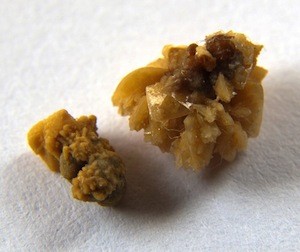
(DrEddyClinic News) Kidney stones are often called the worst pain on earth. Personal horror stories abound about them. No wonder, look at the photo, can you imagine passing that? It’s easy to believe that horrific pain would be the only sign you’ve developed a kidney stone, but what if there are other early warning signs? Great news, there are signs that you have an impending stone, and being aware might give you enough time to deal with it before the pain really hits.
What Is a Kidney Stone?
As the term implies, a kidney stone is a hard deposit, which can be located anywhere in the urinary tract from the kidneys to the bladder. Stones form when urine is too concentrated, allowing crystals to form. [1] What they’re made of determines which of four types they are:

- Calcium stones, the most common type, consist of oxalate, phosphate, or carbonate. These account for 75-85% of all stones.
- Uric acid stones are formed from uric acid.
- Struvite stones are made from calcium, magnesium, and ammonium phosphate.
- Cystine stones, which are hereditary, come from a build-up of cystine, which is not adequately reabsorbed, combined with lysine, arginine, and ornithine.
Three Warning Signs
Most kidney stones pass through the urinary tract with no trouble. Unfortunately, some do not. Left untreated, they can result in terrible pain. Of course, you do not want to wait until that happens, so knowing early symptoms can save you some real misery. Here are 3 signs that you may be developing a stone.
1. Urinating Frequently
Men are much more likely to suffer from kidney stones http://www.dreddyclinic.com/forum/viewtopic.php?f=63&t=33569, so many men try to ignore frequent urination because it’s also a symptom of prostate problems http://dreddyclinic.com/forum/viewtopic.php?f=26&t=32617, something that many men find difficult to face. Do not ignore frequent urination. Not only is it a nuisance that can interfere with your daily activities, it can also be a flag for a serious problem. If it proves to be caused by a kidney stone, catching it early may save you from incredible pain. [2]
2. Blood in Urine
Blood in the urine can have many causes, including infections. But don’t make any assumptions about it. If your urine is discolored pink, red, or brown, it could be caused by a kidney stone. If you try your favorite home remedy for urinary infections and it doesn’t work, do not ignore the problem, try another http://www.dreddyclinic.com/forum/viewtopic.php?f=64&t=33022. [3]


3. Repetitive Urinary Tract Infections
Kidney stones can cause urinary tract infections (UTIs). As a result, if you’ve recently healed one, only to realize that you are getting another, it may be because of a stone. Do not simply repeat treatment of a UTI, or you may end up with another horrific kidney stone experience!
If you experience any of these indications, don’t ignore it! The earlier you discover kidney stones, the more likely it is that you will be able to take care of it with natural methods.
Of course, don’t forget about supporting the health of your kidneys http://dreddyclinic.com/forum/viewtopic.php?f=11&t=33173. We hear about the benefits of liver cleansing http://www.dreddyclinic.com/forum/viewtopic.php?f=37&t=33564 all the time, but the kidneys are the other major organs for toxicity removal. Keep in mind that certain foods and herbs can help clean your urinary tract and prevent stones from forming. Finally, do not forget to drink water! Remember that a primary cause of stones is concentrated urine, so keep yourself well-hydrated.
by Dr. Edward Group DC, NP, DACBN, DCBCN, DABFM
References:
1. Health Central. Kidney Stones http://www.healthcentral.com/encyclopedia/408/137.html. (last accessed 2013-11-05)
2. Mayo Clinic. Kidney stones, Symptoms http://www.mayoclinic.com/health/kidney-stones/DS00282/DSECTION=symptoms. (last accessed 2013-11-05)
3. Abby Willow. Warning Signs of Kidney Stones http://voices.yahoo.com/warning-signs-kidney-stones-8574835.html. June 13, 2011. (last accessed 2013-11-05)
What are Kidney Stones?
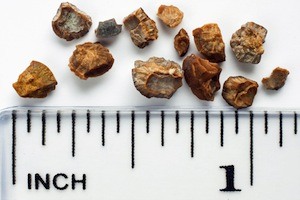
(DrEddyClinic News) Ask anyone who’s had a kidney stone what it’s like and they’ll tell you a horrific tale of pain and agony. Kidney stones, which are jagged mineral deposits, form in the kidneys and pass through the urinary tract. Sound awful? It is. While there’s no way to be immune to developing kidney stones, there are steps you can take to discourage their formation. Let’s take a look at what kidney stones are, why they form, and what you can do to reduce your chances for developing them.
What Causes Kidney Stones?
There are a few factors that can cause kidney stones; one of the most common is excess calcium. [1] While calcium is a nutrient your body needs, if you get too much or your body’s processing systems are imbalanced, calcium can accumulate in the kidneys and bind with phosphates and oxalates to develop stones. Other causes of kidney stones include acidic urine, kidney infections, and genetic predisposition. People who’ve had kidney stones before are more likely to have them again. Secondary factors like obesity, dehydration, and medications may also encourage kidney stones to form. [2]

Why Are Stones Painful?
Sometimes compared to childbirth, kidney stones can be one of life’s most painful experiences. The level of discomfort is proportionate to the size of the stone. Small stones may form and pass through the urinary tract almost without notice. Larger stones, however, are a different story. With a shape like jagged, broken glass, every fraction of a millimeter they pass through the urinary tract can be excruciating.
How Are Kidney Stones Diagnosed?
Back pain http://www.dreddyclinic.com/findinformation/bb/backpain.php, pain while urinating, and blood in the urine are some of the more obvious indications of kidney stones. There are formal tests that can assist in a precise determination, however.
- Urinalysis – Fairly simple and non-invasive, a urine sample can detect an infection or substances linked to stone formation.
- Blood Test – Analyzes blood levels of calcium, uric acid, electrolytes, and phosphorus and can detect imbalances that coincide with stone formation. May also provide information on kidney function.
- Imaging – Quite a bit more invasive, but x-rays and CT scans can detect the location and size of a stone, and sometimes the cause for its formation.
Getting Rid of Kidney Stones
Although painful, most stones pass on their own. Some, however, need help. There are a number of home remedies for discouraging kidney stoneshttp://www.dreddyclinic.com/forum/viewtopic.php?f=64&t=33022 and several hospital-level procedures. One effective solution, known as shockwave therapy, has become very popular. It’s a process in which targeted shockwaves are sent through the body to break up the stones into smaller pieces that pass easier. Interesting side note — using an inversion table is an excellent complement to shockwave therapy.
During another procedure known as a ureteroscopy, a long tube-like tool is inserted through the urethra to break the stones into tiny particles — it’s as fun as you might imagine.
Finally, surgery is an option but typically reserved for the most severe cases. During surgery, a urologist inserts a small tool through an incision in the back to remove the stone.
Can Kidney Stones Be Prevented?
There’s no sure fire way to prevent kidney stones but there are a few strategies that promote normal function of the kidneys. Maintaining a healthy weight and staying hydrated need to be everyone’s foundation. Kidney cleansing, lemon juice http://www.dreddyclinic.com/forum/viewtopic.php?f=11&t=33580, and eating foods that support the kidneys http://www.dreddyclinic.com/forum/viewtopic.php?f=64&t=33021 are also a good idea. Additionally, foods high in betaine, a chemical compound found in seafood, quinoa http://www.dreddyclinic.com/forum/viewtopic.php?f=18&t=33577, spinach, and beets, can help fight kidney stones by balancing urine pH. [3]
Although kidney stones contain calcium, calcium in the urine is influenced by other factors, including sodium, potassium, and vitamin D http://www.dreddyclinic.com/forum/viewtopic.php?f=33&t=33212 intake. It may be, but it’s not necessarily the result of consuming too much dietary calciumhttp://www.dreddyclinic.com/forum/viewtopic.php?f=21&t=33164. [4] Still, if kidney stones are a recurring problem for you, examining your calcium intake is appropriate.
Have you suffered from kidney stones? What did you find to be the most important strategy for combating your condition? Leave a comment and let us know!
by Dr. Edward Group DC, NP, DACBN, DCBCN, DABFM
References:
1. Coe FL, Evan A, Worcester E. Kidney stone disease http://www.ncbi.nlm.nih.gov/pubmed/16200192. The Journal of Clinical Investigation. 2005 October;115(10):2598-608.
2. Malvinder S Parmar. Kidney stones http://www.ncbi.nlm.nih.gov/pmc/articles/PMC421787/. BMJ: British Medical Journal. June 12, 2005; 328(7453): 1420-1424.
3. Frassetto L, Kohlstadt I. Treatment and prevention of kidney stones: an update http://www.ncbi.nlm.nih.gov/pubmed/22150656. American Family Physician. 2011 December 1;84(11):1234-42.
4. Trinchieri A. Diet and renal stone formation http://www.ncbi.nlm.nih.gov/pubmed/23392537. Minerva Medica. 2013 February;104(1):41-54.
